Showing posts with label sensitive skin. Show all posts

Tuesday, October 11, 2022


Skin care: 5 tips for healthy skin

Good skin care — including sun protection and gentle cleansing — can keep your skin healthy and glowing.


Don't have time for intensive skin care? You can still pamper yourself by acing the basics. Good skin care and healthy lifestyle choices can help delay natural aging and prevent various skin problems. Get started with these five no-nonsense tips.

1. Protect yourself from the sun

One of the most important ways to take care of your skin is to protect it from the sun. A lifetime of sun exposure can cause wrinkles, age spots and other skin problems — as well as increase the risk of skin cancer.

For the most complete sun protection:

  • Use sunscreen. Use a broad-spectrum sunscreen with an SPF of at least 15. Apply sunscreen generously, and reapply every two hours — or more often if you're swimming or perspiring.
  • Seek shade. Avoid the sun between 10 a.m. and 4 p.m., when the sun's rays are strongest.
  • Wear protective clothing. Cover your skin with tightly woven long-sleeved shirts, long pants and wide-brimmed hats. Also consider laundry additives, which give clothing an additional layer of ultraviolet protection for a certain number of washings, or special sun-protective clothing — which is specifically designed to block ultraviolet rays.

2. Don't smoke

Smoking makes your skin look older and contributes to wrinkles. Smoking narrows the tiny blood vessels in the outermost layers of skin, which decreases blood flow and makes skin paler. This also depletes the skin of oxygen and nutrients that are important to skin health.

Smoking also damages collagen and elastin — the fibers that give your skin strength and elasticity. In addition, the repetitive facial expressions you make when smoking — such as pursing your lips when inhaling and squinting your eyes to keep out smoke — can contribute to wrinkles.

In addition, smoking increases your risk of squamous cell skin cancer. If you smoke, the best way to protect your skin is to quit. Ask your doctor for tips or treatments to help you stop smoking.

3. Treat your skin gently

Daily cleansing and shaving can take a toll on your skin. To keep it gentle:

  • Limit bath time. Hot water and long showers or baths remove oils from your skin. Limit your bath or shower time, and use warm — rather than hot — water.
  • Avoid strong soaps. Strong soaps and detergents can strip oil from your skin. Instead, choose mild cleansers.
  • Shave carefully. To protect and lubricate your skin, apply shaving cream, lotion or gel before shaving. For the closest shave, use a clean, sharp razor. Shave in the direction the hair grows, not against it.
  • Pat dry. After washing or bathing, gently pat or blot your skin dry with a towel so that some moisture remains on your skin.
  • Moisturize dry skin. If your skin is dry, use a moisturizer that fits your skin type. For daily use, consider a moisturizer that contains SPF.

4. Eat a healthy diet

A healthy diet can help you look and feel your best. Eat plenty of fruits, vegetables, whole grains and lean proteins. The association between diet and acne isn't clear — but some research suggests that a diet rich in fish oil or fish oil supplements and low in unhealthy fats and processed or refined carbohydrates might promote younger looking skin. Drinking plenty of water helps keep your skin hydrated.

5. Manage stress

Uncontrolled stress can make your skin more sensitive and trigger acne breakouts and other skin problems. To encourage healthy skin — and a healthy state of mind — take steps to manage your stress. Get enough sleep, set reasonable limits, scale back your to-do list and make time to do the things you enjoy. The results might be more dramatic than you expect.


Wednesday, July 22, 2020

Why to always remove make-up before bed


As a woman I can definitely say that one of the most annoying things to do is having to remove my makeup before bed. You get home exhausted, ready to lay in bed and then that sad moment  of "Omg I still have makeup on" hits you. ALWAYS remove your make up before bed girls or you'll suffer the consequences I will state below!


1. You WILL break out

If you don't cleanse your face, dirt and dead skin cells are not removed and will stay overnight. They stay on the skin, clogging pores and leading to chronic inflammation in the form of pimples.

2. You'll probably look like a zombie the next morning/ or hideous crows feet!

If you've ever woken up in the morning, looked in the mirror, and wished your skin looked brighter, you not removing your makeup the night before you hit bed is most likely the problem. Oils and dead skin cells on the outermost layers of the skin are matted up against the pillow all night, and natural turnover of this dull epidermal layer is diminished. Regular cleansing and exfoliation are necessary to revealing healthy new skin cells and allowing the natural repair processes of the skin to occur and it could cause crows feet!


3. Your skin will look older — and you'll have more wrinkles.

Dirt and makeup trapped against your skin cause environmentally-induced oxidative damage. This leads to a breakdown of the skin barrier and prematurely ages your face.

4. If you have acne, it'll probably might make it worse.

While cleansing is an important step in anyone's beauty regimen, it's especially key for those who have temperamental skin. For those with oily skin, like acne patients, sleeping in makeup could worsen their skin conditions.

5. You could put yourself at risk for an infection.

While you sleeping in your makeup may not cause an infection,  if you already have an active skin issues, such as an inflamed acne pimple, it's possible that an infection can occur because your skin barrier is compromised. 

6. You could develop a rash.

Makeup often contains irritants like dyes and perfumes that, when left on the skin for long periods of time, can cause inflammation especially for those who have sensitive skin.

With 15 + years of experience, this skincare tip is one I mention to my clients often! 


Wednesday, January 17, 2018

Dull and Tired Skin

Dull, Tired and Stressed skin. 

Imaging a veil over the skin, covering all complexion glows. Skin looks tired strained and no bounce in its step. Skin has overexposed itself and is being scavenged by extrinsic aging. People of all ages complain about a lack of energy. And it’s no wonder. We work long hours making it difficult to manage a personal life, are sleep deprived, and don’t have time to exercise, all while living in a polluted and stress-filled environment. These conditions deplete energy from the body and take their toll our skin too, leaving it dull and lacklustre. To understand the difference between extrinsic and intrinsic aging, look at the backs of your hands. What you see is the result of external, or extrinsic, aging. Now look at the inside of your wrist. The changes you see there are the result of intrinsic aging. 

Symptoms may also include: 
  • Fine lines
  • Coarse wrinkles
  • Loss of elasticity
  • Rough, scaly texture
  • Dry, leathery appearance
  • Broken capillaries
As we grow older, our cells become weaker and signs of damage are more noticeable, we are also constantly exposed to the UV rays of the sun, so our skin starts to appear dry and dull. This is the result of the outside layer of the skin getting excessive build up and is not exfoliated on a regular basis. Build-up is especially noticed after we have spent the summer in the sun. It is more apparent to women since we realise that our make-up doesn't look as fresh and our foundation begins to fade within a couple of hours. Our make-up and foundation is actually being absorbed into the accumulated dead skin cells, which gives a very tired and unhealthy look to the skin. Also as we age everything slows down and vital nutrients are not delivered quickly or well to where they are needed, a good diet is essential. 

Image result for dull and tired skin


Some causes for this could be:

Dryness and lack of proper exfoliation both contribute to skin cell debris.

Exhaustion - Trying to do too much in too little time is taxing both physically and emotionally.
Lack of sleep - For most people, an average of at least eight hours sleep a night is what the body’s immune system needs to fortify itself. Anything less than that and we suffer, whether we’re aware of it or not.
Stress - Our lives are filled with it, both good and bad.
Poor nutrition - When nutrition is good, it enhances body function and maintains steady blood sugar levels throughout the day. When it’s bad, it depletes the system and makes for destructive energy spikes and plunges (which in turn make for not-so-pretty mood swings.)

What you can do to fix that.
  • Invest in a good quality exfoliating scrub that contains fruit acids, glycolic acid or abrasive beads that help slough away the dead cells on the surface of the skin. Dead skin cells don't reflect light well, instead making your skin look dry and dull.
  • Apply an oil-free moisturizer several times daily. Dry skin can often take on a dull, chapped appearance that can make you look tired. Apply moisturizer each day, even if your skin doesn't feel dry. Look for one labeled "noncomedogenic" so you know it won't cause breakouts, even with frequent applications.
  • Wear sunscreen every day. Sun damage can make your skin look discolored and dull, so it's important that a sunscreen with an SPF of 15 or above becomes part of your daily skin care regimen. If adding a sunscreen sounds like too much of a bother, look for a daily moisturizer with a built-in sunscreen to help streamline your morning routine.
  • Wear a tinted moisturizer instead of a thick and heavy foundation. A tinted moisturizer will help your skin's natural color and texture to shine through while adding light reflecting minerals to keep your skin looking bright. Heavy foundations and powders can dull the skin and give it a matte appearance, which can actually make you look older.


Related image


Health and Beauty tips

2200 SW 16 ST Suite 224 Miami, FL 33145
Please “like” & share! Thank you!
I hope you’ve found some of my tips helpful!
FOR LIVE ACTION, FOLLOW ME ON SNAPCHAT: lizskincare 
INSTAGRAM: lizskincaremiami
BEST SKINCARE WISHES LIZ SKINCARE


Friday, December 15, 2017

Baby Skincare Useful Tips


Your newborn is home now, and you're settling into a daily routine. Keeping your baby warm and nourished is tops on your list. Newborn skin is delicate -- and so is the baby's immune system. Chemicals, fragrances, and dyes in clothing, detergents, and baby products can cause newborn skin irritation, dryness, chafing, and rashes. 

A newborn baby is born with wrinkly skin and a protective covering called vernix that naturally peels off during the first week, there's no need to rush it, rub it, or treat it with lotions or creams. Here are some tips you might want to write down in terms of takin care of his/her skin.

Resist the urge to bathe your baby frequently. Too-frequent bathing -- more than three times per week during the first year of life -- removes the natural oils that protect baby's skin. That may leave baby's skin vulnerable and dry. It may also aggravate eczema. For the first month or so, a sponge bath two or three times a week will keep your baby safely clean. In between, simply clean baby’s mouth and diaper area with a little water or cleanser. 
Image result for baby skin care tips


Once-a-week sponge baths (or even less) are best for newborns with darker skin tones (like African-American). These infants tend to have dryer skin and have a higher risk of skin problems such as eczema.

Don't use Scented baby products in the early months. This can irritate your baby's delicate skin. 

Wash baby's clothing before it's worn. Use only baby laundry detergents that are fragrance- and dye-free. Wash baby clothes, bedding, and blankets separately from the family's laundry.


Baby Skin Care: Diaper Rash


Most often, diaper rash is caused by the irritating wetness of a soiled diaper. The rash can also develop when baby's skin is not properly dried after a bath. Sometimes, a bacteria or yeast infection will cause diaper rash. Babies taking antibiotics are especially susceptible to a yeast infection diaper rash because the drugs allow fungal growth. 
Most forms of diaper rash don't require medical care. To treat diaper rash -- and prevent further newborn skin problems:
  • Check diapers frequently.
  • Change diapers immediately when wet or soiled.
  • Wash the diaper area with mild fragrance-free cleanser or plain water. If the rash is severe, use a squirt bottle to cleanse without rubbing.
  • Use a soft clean cloth, not baby wipes. The perfume or alcohol in some wipes can further irritate and dry baby's skin.
  • Pat baby dry. Don't rub. Let the diaper area air-dry fully before putting on a fresh diaper.
  • Apply a thick layer of petroleum jelly (such as Vaseline) or a protective ointment like Desitin or A&D.
  • If using baby powder, take care to keep it away from baby's face. The talc or cornstarch in the powder can cause breathing problems. 
Image result for baby skin care tips

Newborn Skin Soaks Up Calming Touch


Giving your newborn a massage is important one-on-one time. Like cuddling, a massage is a way to convey your love and affection for your baby. In fact, research shows that a baby's very survival depends on being touched by others -- as touch triggers hormones, boosts immunity, and helps fight disease. Also, massaged babies are calmer, sleep better, and cry less -- every parent's dream! 
Block the Sun
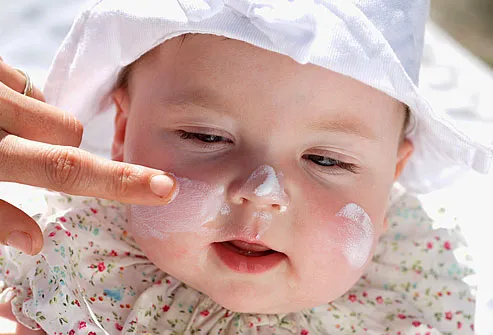
Early exposure to the sun’s UV rays puts kids at risk of skin cancer later in life -- especially infants, whose brand-new skin has less of the pigment that protects it from the sun.
For first 6 months, try to avoid any time in the sun. For babies of all ages, aim to stay inside between 10 a.m. and 3 p.m., when the sun is strongest. When you do head outside:
  • Avoid direct sunlight. Use a stroller shade or an umbrella.
  • Dress your baby in long sleeves and pants in tight weaves. “Hold a T-shirt to the sun. You’ll see how much light passes through,” Robinson says. He recommends rash guards to block the sun’s rays more fully.
  • Use a wide-brimmed hat that covers your baby’s face and neck.  
  • Apply sunscreen. If you can’t avoid the sun, some sunscreen is OK even for the youngest babies. Just be careful when you put it around their eyes and mouth. Reapply every 2 hours or when baby gets wet. Robinson recommends broad-spectrum SPF 30 with zinc oxide. “It’s a physical block, so it starts working right away,” he says. “Plus it’s a mineral we ingest, so no one is allergic.”
Related image

Shield Skin From Spit
When babies teethe and eat, they drool. And saliva has enzymes that can irritate their skin. The problem gets worse when skin gets wet and dry over and over. So before you feed your baby, try coating his face with petroleum jelly. Wipe it off with a soft cotton washcloth when mealtime is over and reapply moisturizer.
Image result for baby drool


Health and Beauty tips


2200 SW 16 ST Suite 224 Miami, FL 33145

Please “like” & share! Thank you!

I hope you’ve found some of my tips helpful!

FOR LIVE ACTION, FOLLOW ME ON SNAPCHAT: lizskincare 
INSTAGRAM: lizskincaremiami


BEST SKINCARE WISHES LIZ SKINCARE


Image Slider